que recherchez-vous?
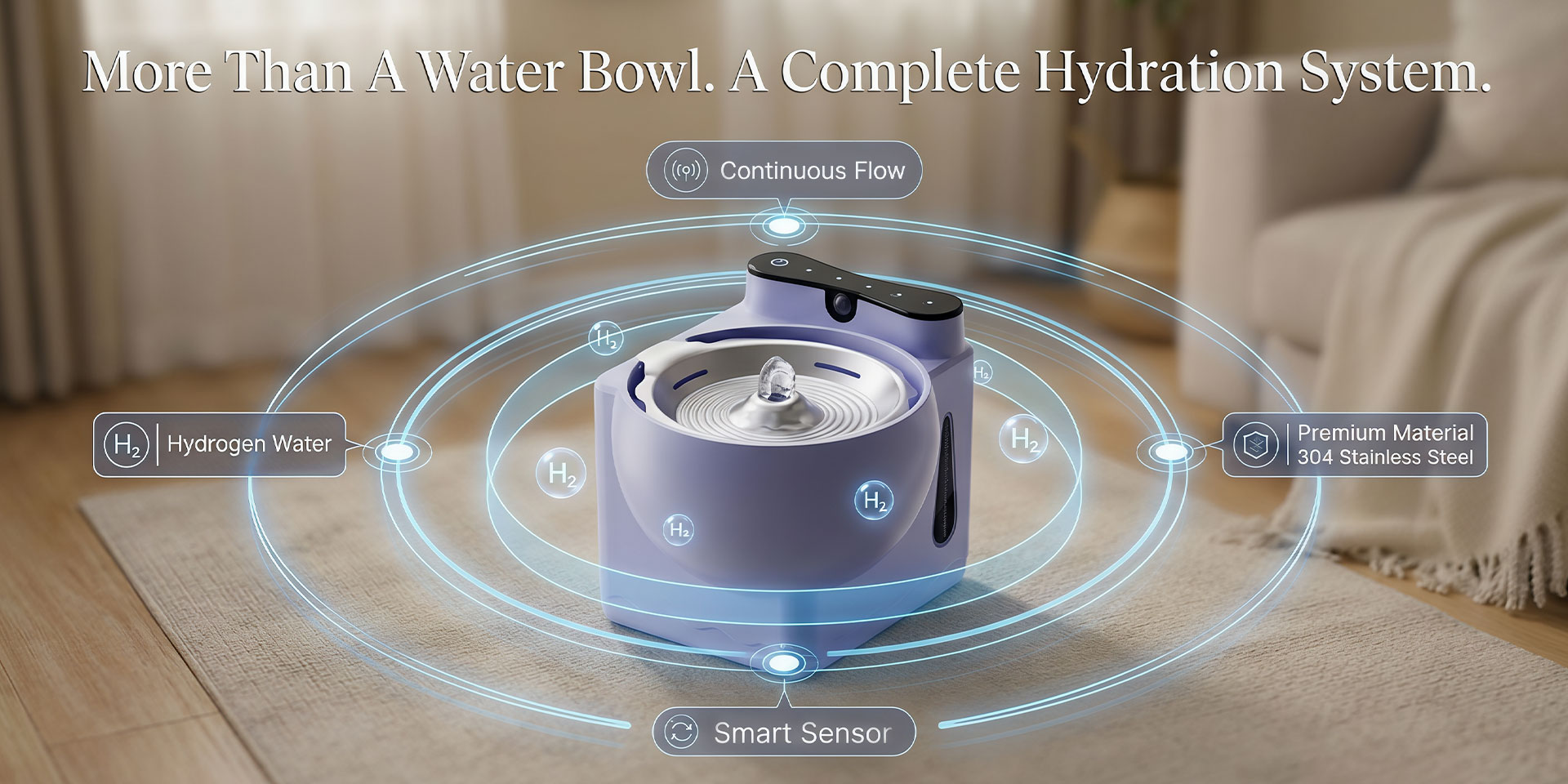
The pet product market is becoming increasingly polarized.
At one end, low-cost products compete primarily on price. At the other, premium products compete through materials, design, technology, functionality and brand positioning.
For distributors, understanding this change is becoming increasingly important.
Basic pet products are relatively easy to compare.
A consumer can quickly compare the price of two conventional water bowls or basic fountains online.
This creates a challenging environment for distributors:
Similar products + many suppliers + transparent pricing = increasing price pressure.
Premiumization provides another path.
Instead of asking how to sell the cheapest product, distributors can ask:
How can I offer a product that consumers cannot easily compare on price alone?
This is where innovation becomes valuable.
Recent industry research shows that stainless steel products have a significant position in the cat water fountain market, while smart and connected hydration products are developing as higher-value segments.
For distributors, these developments suggest an important opportunity:
Move from product distribution to category development.
A premium pet wellness product can be sold through different channels, including:
Different channels require different marketing strategies, but the underlying opportunity is similar: offer consumers a clear reason to choose a higher-value product.
A differentiated product gives distributors more tools.
Instead of competing only on:
Price → Price → Price
the conversation can become:
Technology → Design → Materials → User Experience → Brand → Wellness
This creates more possibilities for premium positioning.
Emerging categories often require consumer education.
This can actually be an advantage for distributors.
A distributor entering a new category early can become not only a seller, but also an educator and category leader.
By producing product demonstrations, educational videos, comparison content and customer testimonials, distributors can help consumers understand why the new category exists.
The companies that establish this understanding early may have an advantage as the category develops.
The future of pet products is unlikely to be defined only by how many products a company sells.
It may increasingly be defined by how successfully it creates and owns a differentiated category.




Whatsapp : +8613825114541
E-mail : admin@yanranyl.com
Official Retail Store:
www.sdyfushop.com